
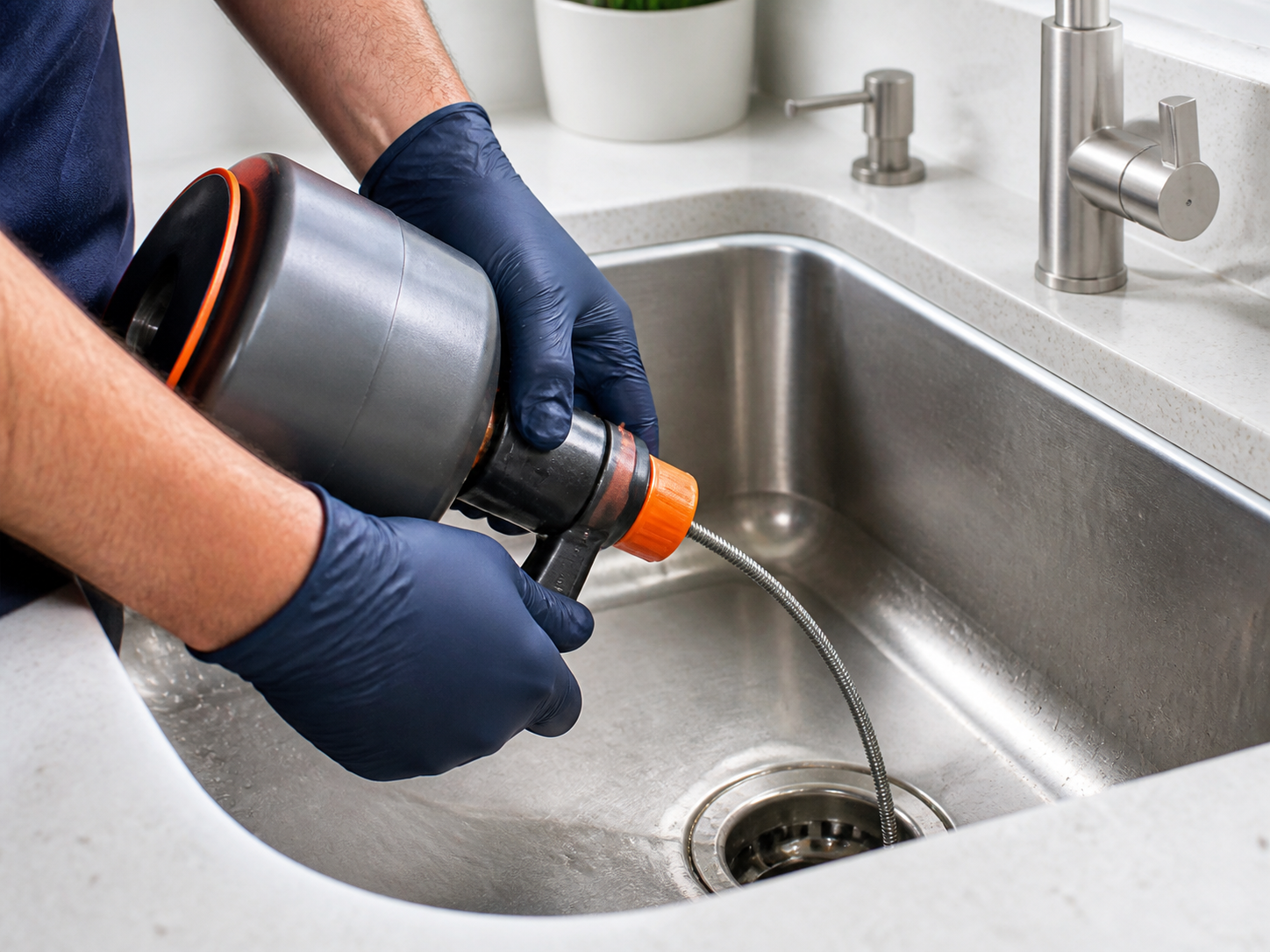
Most drain blockages build gradually as grease, food, hair, soap residue, or unsuitable products collect inside the pipe. A few practical habits can reduce the risk and help you notice problems before a drain stops flowing completely.
Keep grease and oil out of the sink
Cooking fats can cool and stick to the inside of waste pipes. Over time, they trap other debris and narrow the waterway. Allow grease to cool, place it in a suitable container, and dispose of it with household waste instead of pouring it down the drain.
Use strainers where debris collects
A simple sink or shower strainer catches food scraps, hair, and other material before it enters the plumbing system. Empty and clean strainers regularly so water can continue to flow freely.
Be careful what you flush
Toilets are designed for human waste and toilet paper. Wipes, sanitary products, paper towel, cotton products, and similar items do not break down in the same way and can lodge in pipes or contribute to a blockage farther along the system.
Watch for early warning signs
- Water draining more slowly than usual
- Gurgling sounds from sinks, showers, or toilets
- Unpleasant odours near a drain
- Water rising in another fixture when one outlet is used
- A blockage that returns soon after clearing
More than one slow fixture can indicate a problem in a shared drain rather than an isolated trap. Repeated symptoms deserve a professional inspection.
Use maintenance methods carefully
Hot water and routine cleaning can help manage normal soap or grease residue, but harsh chemical cleaners may damage certain pipes, create hazardous fumes, or make later repair work less safe. Check the product and pipe guidance before using any chemical treatment.
Know when to call a plumber
Arrange professional help when water will not drain, sewage backs up, several fixtures are affected, or a blockage keeps returning. A plumber can identify whether the cause is local debris, a damaged pipe, poor fall, root intrusion, or a deeper obstruction and recommend the appropriate solution.
Good drain care is mostly about prevention: stop unsuitable material at the source, respond to slow drainage early, and avoid forcing an unknown blockage deeper into the system.