
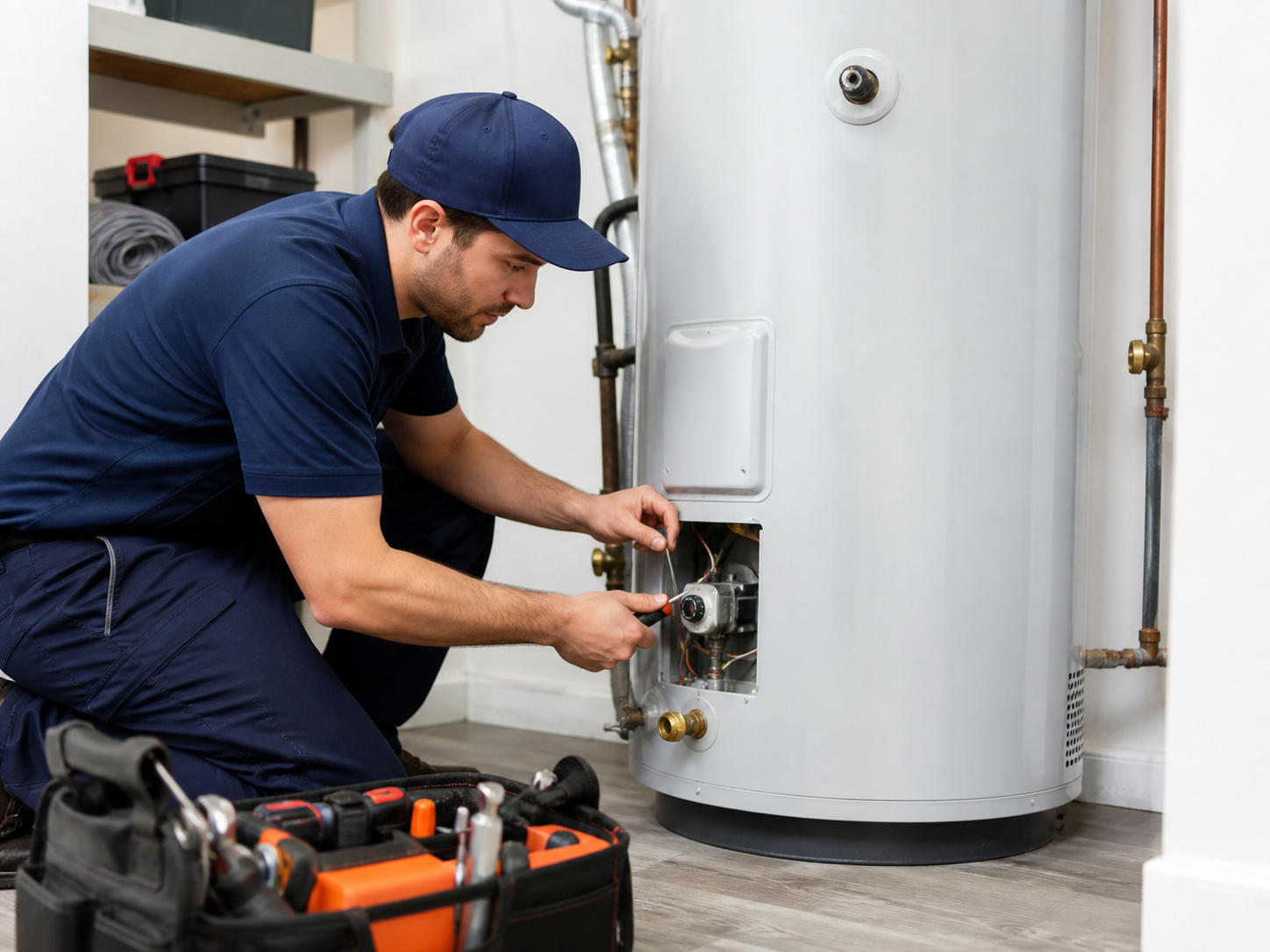
A water heater does not always need replacement at the first sign of trouble. Some faults can be repaired, while others indicate that replacement may offer a safer and more practical long-term solution. The condition of the tank, the type of fault, and the cost of repair all matter.
Hot water is unreliable
If the water no longer reaches the expected temperature, runs out much sooner than it used to, or changes temperature during normal use, the heating components or controls may need attention. An inspection can establish whether a straightforward repair is possible.
There is visible leaking or corrosion
Water around the unit should be investigated promptly. The source may be a valve, connection, or nearby pipe, but leakage from a corroded tank is more serious and often points toward replacement. Rust, staining, or deterioration around connections can also indicate an ageing system.
The water looks or smells unusual
Discoloured water, metallic smells, or recurring sediment may relate to the heater, supply pipework, or water conditions. A plumber can help isolate the source rather than replacing equipment based on guesswork.
The unit makes new or persistent noises
Rumbling, popping, or knocking can occur when sediment collects inside a storage tank. Noise alone does not confirm that replacement is necessary, but persistent sound combined with reduced performance, leakage, or age warrants assessment.
Repairs are becoming frequent
Repeated call-outs and replacement parts can add up. When a heater has several developing faults, compare the likely repair cost and remaining service life with the cost and benefits of a suitable replacement.
Questions to consider before replacing
- Is the fault in the tank, a connection, a valve, a control, or a heating component?
- Are replacement parts available for the model?
- Does the current capacity still suit the property?
- Will a different system require electrical, gas, ventilation, drainage, or structural work?
- What maintenance will the replacement need?
Get the system assessed
A professional inspection helps distinguish a repairable component fault from a failing tank or an unsuitable installation. Before approving replacement, ask for a clear explanation of the problem, the proposed capacity and type, the installation requirements, and the warranty terms.
Planning replacement before a complete failure can reduce disruption and gives you time to compare appropriate options rather than making a rushed decision during a leak or loss of hot water.